Avora Lumina Is Selling Fast: Inside the Residential Cruise Ship That Is Turning Heads
As first reported on Startup.club and the Live at Sea Facebook Group, Avora Residences launched in February of 2026. Since then it is making serious waves in the world of residential cruising. And based on what I am hearing directly from the company, the market is responding.
I spoke personally with President Chris Cox just a few days ago. His message was straightforward. They are being overwhelmed with demand. In the weeks since the announcement, dozens of units have been sold or reserved. What is particularly interesting is that it is not just one segment of buyers driving that activity. The lower cost entry-level units are going fast. But the larger, higher-priced residences are also being snapped up quickly. Demand is coming from both ends of the market.
As one example, Avora has already sold or reserved approximately 40 percent of its Solstice Class units. For a ship that does not launch until January 2028, those numbers speak for themselves.
That kind of early momentum is hard to ignore.
What Is Avora Lumina?
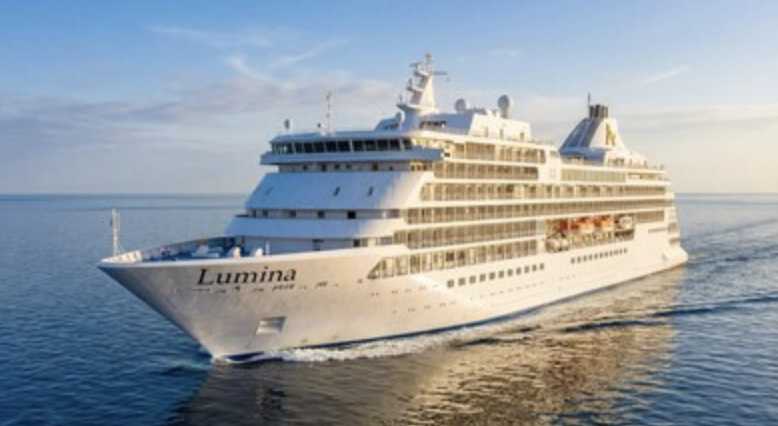
Avora Lumina is a new residential cruise ship launching in January 2028. It is being converted from Regent Seven Seas Navigator, an ultra-luxury vessel owned by NCL. The project is led by Residential Cruise Holdings, the same company that operates Villa Vie Odyssey, giving it real operational experience in long-term life at sea.
This is not a concept. This is not a render on a website. The deal with NCL has been signed. The ship exists. The launch date is set.
That distinction matters more than it might seem.
A Ship I Have Sailed Before
I traveled on a Regent Seven Seas ship in 2023 and came away genuinely impressed. What stood out was not the size or the amenities — it was the feel of the ship. Fewer people. Staff who actually knew your name by day two. A level of personalized service that is hard to find on larger vessels. It felt less like a cruise and more like a private club that happened to be floating.
The new owners have no intention of walking away from what made the Navigator great.
The arrangement with Norwegian Cruise Line includes a nine-year charter with a nominal purchase option, establishing a long-term operational relationship with one of the most experienced maritime organizations in the world. Avora has committed to preserving the operational DNA of the Navigator wherever possible, which I think is a key winning move: maintaining established systems, standards, and key vendor and service relationships that have defined the vessel’s performance over decades of global service. Having sailed the smaller Regent class ships, I can say it is probably one of the best floating experiences in the world.
Regent Seven Seas is widely considered one of the top ultra-luxury cruise lines on the planet, combining exceptional gourmet dining, spacious all-suite accommodations, and staff-to-guest ratios that create a genuine five-star hotel experience at sea. Nearly everything is included: fine dining, premium wines, excursions, gratuities. The experience never feels nickel-and-dimed. The fact that Avora intends to preserve that operational culture rather than replace it is one of the most compelling things about this conversion. It truly will be an ultra luxury residence at sea.
As Kathy Villalba put it, “Navigator has a soul, built through years of disciplined operations, experienced crews, and trusted relationships. We intend to honor that legacy while transforming the ship into a true long-term residential platform.”
In my opinion, that is exactly the right approach.
Why This One Is Different
Getting in early on a cruise condo project has historically carried real risk. Several high-profile residential ship concepts have raised money, generated excitement, and then quietly disappeared before a single passenger ever boarded. Buyers have been burned.
Avora Lumina is different for a few reasons.
First, the ship is already in hand. Securing the rights to Regent Seven Seas Navigator through a deal with NCL removes one of the biggest uncertainties that has sunk other projects. There is no waiting for a shipyard to deliver a vessel that may or may not materialize.
Second, the operator has done this before. The operators also run Villa Vie Odyssey, which means the team understands what long-term residential living at sea actually requires. This is not a group of hotel developers guessing at how to run a ship. And to be clear they had their challenges and continue to work through them. And from my conversations with them have learned from those mistakes: what works and what doesn’t work. Converting a legacy cruise ship to residential condo doesn’t exactly have a playbook.
Third, the legacy of the Navigator itself adds credibility. The bones of this ship are exceptional. Every unit is a relatively large suite based on traditional cruise ship standards, with residences ranging from approximately 300 to over 1,100 square feet. The ship underwent a $40 million refurbishment in 2016 and already has an apartment-like feel, with larger suites, laundry facilities, and a more intimate scale than the massive ships dominating cruising today. It is the kind of vessel that lends itself naturally to long-term living.
How the Ship Is Being Transformed
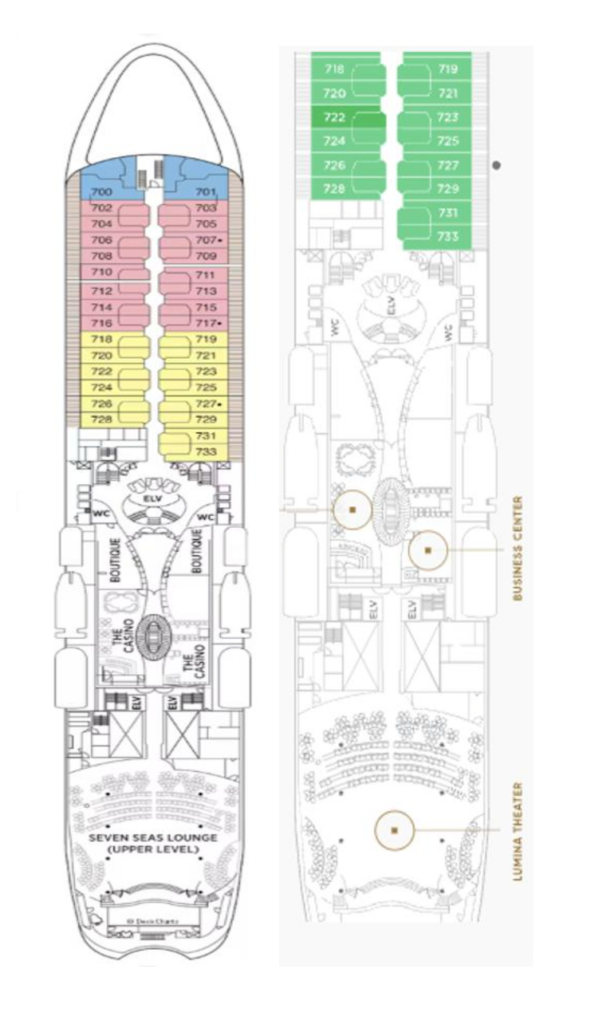
The deck plans tell the story better than any press release.
A Live at Sea employee shared side-by-side comparisons of the original Regent Seven Seas Navigator layout alongside the planned Avora Lumina conversion. The differences are deliberate and revealing.
Deck 7: Casino becomes a Business Center. On the Navigator, Deck 7 housed a full casino and boutiques — classic cruise ship amenities built for vacationers. On Avora Lumina, that space is being converted into a dedicated Business Center. This is one of the clearest signals of who this ship is being built for. Residents who work remotely or run businesses need productive space, not slot machines.
Deck 6: Entertainment becomes community spaces. The Navigator’s Deck 6 featured the Seven Seas Lounge, a Stars Lounge, and a Coffee Connection area branded around Club.com.
Avora Lumina replaces this with the Lumina Lounge, a Library, a Solace Lounge, and a Card and Conference Room. The shift is from transient entertainment to spaces designed for longer-term living and gathering.
Deck 5: Compass Rose dining becomes Meridian House. The Navigator’s signature main dining room, Compass Rose, gave way to Meridian House on Avora Lumina.
The footprint is similar but the name and concept shift signals a more residential dining philosophy rather than a formal cruise restaurant experience.
Deck 10: Pool deck gets refined. The Navigator’s pool deck featured La Veranda and Prime 7, well-known Regent dining venues. Avora Lumina introduces Ember and Oak and Serene at the Terrace, along with a Pool Grill and Pool Bar. The overall outdoor living space remains generous and social.
Deck 11: Jogging track and Aurelia Lounge replace Galileo’s Lounge. The Navigator’s observation lounge at the top of the ship becomes a more active space on Lumina, with a jogging track surrounding an open deck area and the Aurelia Lounge replacing Galileo’s as the social anchor on the upper deck.
Wellness deck: Lumina Spa replaces the original spa. The fitness center, aerobics studio, saunas, and beauty salon footprint stays largely intact. The rebrand to Lumina Spa reflects the overall identity shift, and the space appears to be refined rather than dramatically altered. For long-term residents, a well-equipped wellness facility matters far more than it does for a two-week cruise passenger.
Living on a ship is very different from vacationing on one. Residents don’t need constant entertainment, bars, or casinos. Instead, health and wellness replace the midnight buffet, and peace and quiet replace the bingo announcements and belly-flop contests.
Three Years Around the World
One detail from their press announcement that I think deserves more attention is the itinerary structure.
Avora Lumina plans to launch from Lisbon, Portugal and embark on a three-year continuous global circumnavigation, visiting more than 140 countries and over 400 destinations across all seven continents. The ship will spend up to five days in port at a time, prioritizing depth of experience over rapid port turnover.
But here is what really sets this apart. After the first circumnavigation, residents will have structured input into future itineraries. Chris Cox described it directly: “We are building a resident-driven global platform. After the first circumnavigation, owners will help shape where Lumina sails next. That fundamentally changes the residential cruise model.”
The ship is also polar-certified, enabling voyages to Antarctica and the Northeast Passage, destinations that most residential ships cannot access. And remember, it’s a smaller ship, allowing it to access far more ports than the giant cruise ships of today.
The company also announced “Golf around the world program” offering a once in a lifetime experience travelling around the world and playing at some of the best golf clubs in the world near the coast.
Elevating the Culinary Experience
Avora is also making a serious commitment to food, which matters more than people give it credit for when you are living somewhere full time.
The culinary program will feature destination-inspired dining concepts that reflect the regions visited throughout the circumnavigation. Rotating seasonal menus, elevated wine programs, chef-led tastings, and locally sourced ingredients made possible through extended port stays will define the onboard dining experience.
This is not cruise ship food. This is a program built around the idea that what is on your plate should reflect where you are in the world.
Who Is It Built For?
Avora Lumina is designed for people who want to live, work, and travel the world from a single address that happens to move.
The conversion plan includes dedicated workspaces, with the casino being repurposed into productive work areas. High speed satellite internet powered by Starlink is expected onboard. I used Starlink on a recent cruise to Iceland and was able to make calls, join a podcast, and watch Netflix in the evening. The only challenge was finding a quiet place to work. That problem appears to be one Avora has thought about.
For remote workers, entrepreneurs, retirees, and founders, this is a genuinely compelling proposition. Launching a startup at sea is no longer a hypothetical.
What Does It Cost?
Avora has introduced pricing that is competitive for the ultra-luxury residential segment. Residences are expected to start around $545,000 and reach approximately $4.2 million for the largest homes onboard. A five-year ownership option is available starting around $219,600, priced at roughly 40 percent of a unit’s full value.
Monthly fees for the smallest suites start at approximately $8,355 for single occupancy and $12,355 for double, covering an all-inclusive lifestyle that includes dining, housekeeping, concierge services, and continuous global travel.
Owners who are not onboard full time will also have the option to rent out their residences, which creates the possibility of offsetting ownership costs or generating a return.
The Bigger Picture
Residential cruising is still a small market but it is growing. In 2025, the cruise industry carried approximately 37.7 million passengers worldwide. An estimated 30,000 to 40,000 of those took world cruises. The residential segment sits at a fraction of that number today, but projects like Avora Lumina are bringing it closer to the mainstream.
The founder of Avora Residences, Mikael Petterson, put it simply. “Residential cruising has proven its viability. Avora Lumina represents the next evolution, purpose-built for long-duration global living, expedition capability, and a more refined residential experience.”
CEO Kathy Villalba added, “Navigator has a soul, built through years of disciplined operations, experienced crews, and trusted relationships. We intend to honor that legacy while transforming the ship into a true long-term residential platform.”
Based on the demand Chris Cox described, the market appears to agree.
If you want to follow the story as it develops, join the Live at Sea Facebook Group or come back for more in depth articles about living at sea on LiveAtSea.com.