The Future of Residential Cruise Ships: Three Ships. Three Visions.

Which One Would You Choose to Call Home?

As the concept of living at sea continues to evolve, one question keeps coming back to me:

What makes the perfect residential cruise ship?

Is it intimacy? Size? Amenities? Stability? Entertainment? Access to small ports? Or is it something more?

I’m writing this while aboard Celebrity Equinox on a 20-day Mediterranean cruise. Like most large cruise ships, it offers incredible amenities, but I still find the crowds to be a bit much. Fortunately, we’ve been able to escape some of that by spending much of our time in The Retreat, Celebrity’s suite enclave.

That experience reinforced something I’d already noticed over the years. Some of our favorite cruises have been aboard smaller ultra-luxury ships from Regent Seven Seas and Silversea. They simply feel more personal. The service is more intimate, the atmosphere is quieter, and the ship itself begins to feel less like a resort and more like home.

Then, while docked in Malta, I spotted the Emerald Azzurra tied up beside us.

My first thought was, “That would be an incredible ship to live on.”

But then I started asking myself the harder questions.

Would I enjoy the intimacy of such a small ship? Would I miss having multiple restaurants? Could I live with more motion at sea? Would the limited amenities eventually become a drawback?

It made me realize there probably isn’t one perfect residential cruise ship. There may actually be three very different visions of what life at sea could become.

The Emerald Azzurra Ship Docked in Malta.

Image from my room of the Emerald Azzurra in Malta.


Vision One: The Private Yacht

Imagine stepping aboard a vessel with fewer than 100 residents.

There are no crowds, no long corridors, and no waiting for elevators. Within a few days, you know nearly everyone by name.

This isn’t just a ship. It feels like a floating private estate.

The Emerald Azzurra excels at delivering an intimate lifestyle. Its greatest strength is its ability to reach destinations that larger vessels simply cannot. Tiny Greek islands, Croatian fishing villages, hidden Mediterranean coves, and boutique marinas become your neighborhood.

Outdoor living becomes the centerpiece. Residents spend afternoons swimming directly from the marina platform, paddleboarding in crystal-clear water, or enjoying sunset cocktails on open decks that never feel crowded. To me, that’s what makes this style of ship so appealing.

For those seeking privacy and exclusivity, this yacht would be hard to surpass.

The tradeoffs are simply the result of its size. There are fewer restaurants, a smaller fitness center, and more limited public spaces. While that may be perfect for a vacation, I wonder whether I would miss the variety after living aboard for several years.

Today, Emerald Azzurra isn’t designed as a residential ship, but it certainly has a residential feel. Another reality is that smaller ships are generally more expensive to operate on a per-resident basis. There really are economies of scale at work. Smaller ships also tend to have smaller staterooms, making every square foot even more valuable.

Avora Lumina Ship

Image from Avora Lumina blog


Vision Two: Small-Ship Luxury

Now imagine something entirely different.

Not a cruise ship.

Not a yacht.

A purpose-built residential community that happens to travel the world.

Using the elegant Seven Seas Navigator as the foundation, Avora Lumina represents what I believe may be the sweet spot between intimacy and capability.

With a few hundred residences instead of just a few dozen, the ship becomes large enough to support world-class amenities while remaining small enough to foster genuine community.

Residents could enjoy multiple restaurants, wellness facilities, a medical clinic, coworking spaces, libraries, lecture halls, a theater, fitness facilities, cafés, lounges, and bars, all while still feeling like they are coming home instead of checking into another cruise.

Unlike traditional cruise ships, every design decision is made for permanent residents rather than vacation guests.

That creates opportunities for stronger friendships, lifelong learning, entrepreneurship, wellness, and shared adventures around the globe.

It becomes a community that moves together.

Celebrity Equinox Ship

Image from a tender of the Celebrity Equinox


Vision Three: The Floating City

During my research, I also came across another residential concept that appears to be targeting a much larger ship, advertising approximately 1,200 residences.

The company has not yet announced which vessel it intends to purchase, so for the sake of comparison, let’s imagine a converted MSC Rhapsody (which is currently for sale if you have 95M), similar to the ship I am traveling on while writing this article, the Celebrity Equinox 

Here, scale becomes the defining advantage.

A ship of this size could support an astonishing range of amenities, including:

  • Numerous restaurants and cafés
  • Resort-style spas
  • Indoor gardens
  • Walking promenades
  • Art and cooking studios
  • Conference facilities
  • Educational spaces
  • Comprehensive medical services
  • Entertainment venues
  • Sports facilities

Rather than resembling a yacht, it begins to feel like an elegant neighborhood at sea.

Its size also creates operational efficiencies. More residents allow maintenance costs to be spread across a much larger ownership base, potentially lowering costs per residence while dramatically expanding available amenities.

Of course, there are tradeoffs.

Larger ships cannot visit many of the world’s smaller ports, and the intimate atmosphere naturally gives way to a more diverse metropolitan community.

In many ways, it’s the difference between living in a vibrant downtown city and living in a quiet coastal village. Neither is better. They’re simply different lifestyles.

Three Different Dreams

None of these concepts is objectively better than the others.

They simply appeal to different people.

If your dream is to own a residence aboard a private yacht where everyone knows your name, the Emerald Azzurra offers something truly special.

If your vision is a balanced life of luxury, exploration, wellness, and community, Avora Lumina may represent the ideal middle ground.

If you imagine a vibrant floating city with endless amenities and an active social scene, a larger converted ocean liner opens up possibilities that smaller ships never could.

A New Category of Living

For decades, people have debated where to retire, where to invest, and where to build their dream home.

Perhaps the more interesting question is no longer “Where?”

Perhaps it’s “Why should home stay in one place?”

Residential cruise ships are no longer just an intriguing idea. They are becoming an entirely new category of real estate, where your address changes, your neighbors become lifelong friends, and the world itself becomes your backyard.

After standing on the deck of Celebrity Equinox, looking across at the Emerald Azzurra, and imagining what a converted Seven Seas Navigator or a much larger residential ship could become, I’ve come to one conclusion.

There probably isn’t one perfect residential cruise ship.

There are simply different visions of the same dream.

Some people will want the intimacy of a private yacht. Others will want the balance of a purpose-built residential community. Still others will embrace the energy and amenities of a floating city.

The one thing that connects all of these concepts is the freedom to wake up somewhere extraordinary tomorrow.

And perhaps that’s the greatest luxury of all.
Living at Sea Without Being Wealthy: Budget Paths to the Residential Cruise Lifestyle

The biggest myth about residential cruising is that it’s only for the ultra-wealthy. Spend any time inside the live-at-sea community and a different picture emerges: a growing number of residents are buying entry-level units, renting from owners, working remotely from the ship, and structuring their lives so the ocean costs less than the suburb they left behind.

Here’s how it actually gets done.

The Question Most People Are Quietly Asking

“We would LOVE to live on the sea. We are trying to learn how people do it full time without being rich!” — Live at Sea Community Member

That sentiment is more common than the marketing suggests. Many of the people considering this lifestyle aren’t trust-fund retirees. They’re empty-nesters, remote workers, small business owners, and couples in their 50s who have built equity but aren’t sitting on tens of millions of dollars.

The good news: the residential cruising market has segmented enough that there are multiple price tiers and structures worth understanding.

The Pricing Tier Landscape

Residential cruise ships now span a broad range, from value-oriented models to ultra-luxury vessels.

On the value end, Villa Vie’s Odyssey has been the most accessible entry point, with multiple ownership programs introduced over time — including lifetime, multi-year, and “Endless Horizons” plans designed to lower the barrier to entry.

On the luxury end, Avora Lumina (the Seven Seas Navigator conversion launching January 2028) starts around the low $200K range for a five-year ownership model and scales up significantly for larger units and longer terms.

“Pricing for the five-year model starts in the low $200Ks and increases depending on the unit. So even that one can be budget friendly.” — Live at Sea Community Member

The takeaway: don’t assume the first quote you receive is the only structure available. Most operators offer multiple programs, and the right one depends on how long you actually plan to live aboard.

Renting as an Entry Point

For people who aren’t ready to commit to a purchase, renting from existing owners is an increasingly viable path.

Owners often need to rent their cabins to offset maintenance fees during periods they’re not aboard. That creates a real, growing inventory of medium- and long-term rentals — sometimes at prices well below the equivalent traditional luxury cruise.

This approach has two advantages:

  1. You can test the lifestyle. A few months aboard tells you more than a year of YouTube videos.
  2. You avoid the capital commitment. No depreciation risk, no resale headache, no upfront six-figure check.

Many residents recommend renting before buying for exactly this reason. The ship that looks perfect on a brochure may not fit your actual life — and finding out as a renter is a far cheaper lesson.

Working from the Ocean

The single biggest factor expanding access to residential cruising isn’t a new ship class — it’s reliable internet.

“I am 55, but the ability to work on a ship with Starlink changes the equation.” — Live at Sea Community Member

Starlink and similar maritime broadband solutions have made remote work genuinely viable from the middle of the ocean. Zoom calls, cloud collaboration, and full participation in distributed teams are no longer marketing copy — they’re routine.

This unlocks a different financial model entirely. If you’re still earning, the cost of living at sea is offset by the income you continue to generate. The ship doesn’t need to be funded entirely from savings; it can be a working life with a moving address.

“I look at cruise living as a subcategory of being a digital nomad. I am not retired, and the fact that I still need to work would alleviate much of the downside of living on a cruise ship.” — Live at Sea Community Member

For business owners, the model often shifts to hybrid: in the office during port stays near home, fully remote when sailing.

The Age Range Myth

A common misconception is that residential cruising is exclusively for retirees in their 70s and 80s. Footage of any one ship can reinforce that stereotype, but the reality on board is broader.

“I don’t know how old you are, but the average age on Villa Vie Odyssey is around 60. There are many in their 50s on the ship living very actively. Come check it out!” — Live at Sea Community Member

The 50s cohort is meaningful and growing — particularly among entrepreneurs, remote workers, and couples whose children have launched. As work-from-anywhere becomes the norm, expect that average age to drop further.

Programs That Lower the Entry Cost

Operators have experimented with several structures designed to make residential cruising more accessible:

  • Multi-year ownership (e.g., five-year programs) at lower entry prices
  • Lifetime cabin programs that amortize cost over decades
  • Deposits with deferred final payment that hold a unit while buyers prepare to move aboard
  • Founder pricing for early buyers willing to commit before launch

Each of these comes with its own risks — particularly deposit forfeiture if a ship doesn’t launch — and warrant careful diligence. But for buyers who do their homework, the entry price for residential cruising is meaningfully lower than the brochure suggests.

The Practical Path

If affordability is your primary constraint, the community’s collective advice tends to converge on a few moves:

  1. Rent first. Live aboard for a month or two before committing capital.
  2. Look at value-oriented operators. Villa Vie’s pricing has consistently been more accessible than ultra-luxury alternatives.
  3. Consider entry-level units. Smaller cabins and shorter ownership terms dramatically reduce upfront cost.
  4. Keep working. Remote income changes the math more than any other single variable.
  5. Downsize on land. Selling a large primary home often funds the entire residential cruise transition.

Living at sea isn’t free — but it isn’t reserved for billionaires either. The path exists. Most people just don’t realize how navigable it is until they start asking the right questions.

How Are You Approaching the Numbers?

If you’re working out whether residential cruising fits your budget, you’re not alone — and the community is full of people who’ve solved it creatively. Share your strategy, your concerns, or your roadblocks in the comments. The next person reading this is asking the same question.

Avora Residences’ Lumina World Voyage: Inside the 2028 Residential Cruise from Lisbon to Antarctica


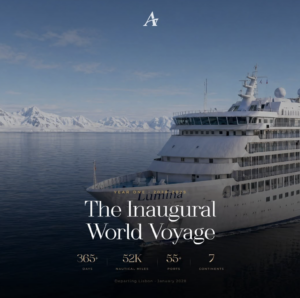
Avora Residences Lumina cruise ship in polar waters for the 2028 Inaugural World Voyage

Avora Residences’ Lumina will depart Lisbon in January 2028 for a 365-plus-day inaugural world voyage across seven continents.

My wife and I purchased a unit aboard Avora Residences’ Lumina, so the ship’s inaugural 2028 world voyage is more than a cruise itinerary to us. It may be the beginning of our life at sea.

We live in Fort Lauderdale, which means we are already surrounded by cruise ships, Caribbean routes, and plenty of easy departures from South Florida. Because of that, the idea of flying all the way to Lisbon for the inaugural sailing is something we are seriously thinking about, even though it would be far more convenient to simply wait and board later.

But inaugural sailings are different. There is something special about the first chapter of a ship’s story, especially when that ship is intended to become a home at sea rather than just a vacation vessel. Lumina’s first-year itinerary is ambitious, wide-ranging, and built around several once-in-a-lifetime experiences.

The voyage is scheduled to depart Lisbon in January 2028 and sail through January 2029. According to Avora’s promotional materials, the Inaugural World Voyage will cover more than 52,000 nautical miles, visit 55-plus ports, cross seven continents, and unfold across eight major itinerary legs over 365-plus days.

Avora describes the route as “Lisbon to Antarctica and back,” with the theme: “Departing Lisbon. Arriving at the End of the World.”

A Personal Look at the Route

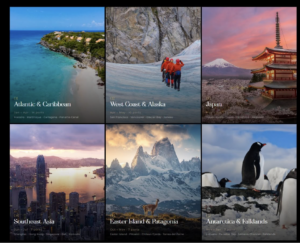
The first leg, Atlantic & Caribbean, runs from January to April 2028 and includes 14 ports. Highlighted stops include Madeira, Martinique, Cartagena, and the Panama Canal.

I have to admit, I am not overly excited about the Caribbean portion of the route. Living in Fort Lauderdale, the Caribbean is very accessible, and after a while, many of the islands can begin to feel somewhat similar. Beautiful, yes. Worth visiting, yes. But not necessarily the part of the itinerary that makes me want to jump on a plane to Lisbon.

The Panama Canal, however, is a different story.

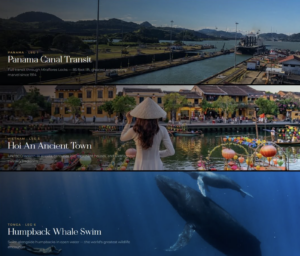
A full transit through the Miraflores Locks, including the canal’s 85-foot lift, would be fascinating. The Panama Canal is one of those engineering achievements that is hard to fully appreciate until you experience it from the water. For a residential ship beginning a global journey, it also feels symbolically right. You are not just taking a cruise. You are crossing from one ocean into another chapter of the voyage.

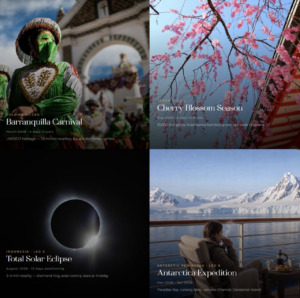
Another major highlight in this opening leg is Barranquilla Carnival in Colombia, scheduled for March 2028, with four days in port. The event is described as a UNESCO-recognized celebration with 1.5 million revelers, Batalla de Flores, cumbia music, and carnival traditions.

That sounds like a true once-in-a-lifetime experience. It is exactly the kind of event that makes a long-term world voyage more compelling than simply visiting a list of ports. Timing matters. Being in the right place at the right moment matters. Barranquilla Carnival feels like one of those moments.

From there, Lumina moves into Leg 2: West Coast & Alaska, scheduled for April to May 2028. This section includes 10 ports, with San Francisco, Vancouver, Glacier Bay, and Juneau among the destinations shown in the itinerary materials.

Alaska is incredible. Glacier Bay and Juneau bring a completely different energy from the Caribbean, with glaciers, fjords, wildlife, and scenery that reminds you how small human beings are, which is probably healthy for us every now and then. For a ship like Lumina, Alaska also makes sense as an early statement that this is not just a warm-weather leisure route. This voyage is built to move through very different climates, landscapes, and experiences.

Japan in Cherry Blossom Season


Leg 3: Japan runs from May to June 2028 and includes seven ports. Destinations shown include Tokyo, Kyoto, Osaka, Hiroshima, and Nagasaki.

One of the featured experiences is cherry blossom season in Kyoto, scheduled for May 2028, with five days in Kyoto. Highlights include the 10,000 torii gates of Fushimi Inari, the Arashiyama bamboo grove, and late peak blossoms.

This one gets me personally.

I have been to Tokyo, but for business and I missed cherry blossom season. Seeing Japan during that window has always felt like one of those travel experiences that everyone talks about for good reason. Kyoto, in particular, has a different kind of appeal. Temples, gardens, old streets, torii gates, bamboo groves, and cherry blossoms all in one stop is the kind of destination planning that makes this itinerary stand out.

This is one of the biggest reasons the inaugural sailing feels tempting. It is not just Japan. It is Japan at a meaningful seasonal moment.

Southeast Asia, Vietnam, and the Eclipse

Leg 4: Southeast Asia follows from June to July 2028, with seven ports. The route highlights Shanghai, Hong Kong, Singapore, Bali, and Komodo.

This leg combines major Asian cities, island landscapes, and cultural landmarks across the region. It is the kind of section that gives a world voyage its range: city energy, tropical scenery, history, food, and wildlife all within a relatively short stretch of the route.

Leg 5 includes Vietnam and Indonesia highlights in August 2028. One featured stop is Hoi An Ancient Town in Vietnam, known for its UNESCO-listed lantern-lit streets, centuries-old merchant houses, and Vietnamese culinary traditions.

Another major highlight is the total solar eclipse positioning in Indonesia in August 2028. The itinerary notes 13 days of positioning for the eclipse, with an expected two to four minutes of totality. The materials reference the diamond ring effect, solar corona, and the possibility of seeing stars at midday.

That is not normal cruise planning. That is the kind of detail that makes a residential ship itinerary feel curated rather than assembled.Anyone can put ports on a map. Timing a voyage around a total solar eclipse is far more interesting.

French Polynesia and the South Pacific

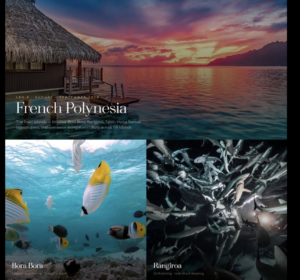
Leg 6: French Polynesia and the South Pacific runs from August to September 2028. This section focuses on Moorea, Bora Bora, Rangiroa, Tahiti, the Heiva Festival, lagoon dives, and overwater bungalow culture across 118 islands.

I have always dreamed of French Polynesia.

There are some destinations that seem to live in your imagination long before you ever visit them, and French Polynesia is one of those places for me. Bora Bora, Moorea, Tahiti, and Rangiroa are the names people use when they are trying to describe paradise without sounding ridiculous. Somehow, the names still work.

Bora Bora is highlighted for lagoon snorkeling, with three days in port. Rangiroa is featured for drift diving and reef shark feeding. Tonga is also included as a featured wildlife experience, with the opportunity to swim alongside humpback whales in open water.

This section of the voyage may be one of the most visually stunning. Coral lagoons, reef life, Polynesian culture, marine wildlife, and some of the most famous islands in the world. For anyone who loves the idea of living at sea, French Polynesia feels like one of the emotional high points of the route.

Easter Island, Patagonia, and the Road South

Leg 7: Easter Island & Patagonia is scheduled for October to November 2028 and includes seven ports. Highlighted destinations include Easter Island, Pitcairn, the Chilean Fjords, and Torres del Paine.

This is where the itinerary begins to feel remote in a different way.

Easter Island brings mystery, archaeology, and cultural significance. Pitcairn Island is one of those places that most people will never visit. Ever since reading Mutiny on the Bounty, I have wanted to see it for myself. As the remote refuge of the HMS Bounty mutineers, Pitcairn holds a unique place in maritime history. The Chilean Fjords and Torres del Paine then introduce the rugged landscapes of Patagonia, with towering mountains, glaciers, and some of the most dramatic scenery on Earth.

This leg feels like the bridge between the dreamlike South Pacific and the raw edge of the polar world.

Antarctica as the Finale

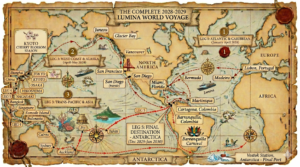
Here is a refined, highly accurate alt text description for **watermarked_img_10477634848595375098.png**, optimized to perfectly capture the exact details, geography, and text displayed on your final map. --- ### Alt Text Description An antique, widescreen, Indiana Jones-style fantasy travel map printed on aged, crinkled parchment paper with a decorative border and a wax seal. The map depicts a global cruise itinerary labeled "THE COMPLETE 2028-2029 LUMINA WORLD VOYAGE." The map features stylized continents, decorative compass roses, sea monsters, and a dashed red route line with arrows tracking a continuous, eastward-to-westward cruise journey. **Key sections and route pathways include:** * **Leg 1 (Atlantic & Caribbean):** Begins in Lisbon, Portugal, traveling southwest to Madeira, west across the Atlantic to Bermuda, and southwest to Miami, Florida. From Miami, it loops down to Martinique, heads west to Cartagena and Barranquilla (Colombia), and transits the Panama Canal. * **Leg 2 & 3 (West Coast & Asia):** From the Panama Canal, the red line tracks north along the Pacific coast past San Diego and San Francisco to Vancouver, Glacier Bay, and Juneau. It then crosses the Pacific Ocean west toward Japan, hitting Tokyo, Kyoto, Osaka, Hiroshima, and Nagasaki, before moving south past Shanghai, China, and Southeast Asia (Singapore, Indonesia, and Cairns/Sydney, Australia). * **South Pacific to Antarctica Conclusion:** The route moves from Sydney to Auckland (New Zealand), then loops north through Fiji (labeled "Fjii") and Tahiti. From Tahiti, the line travels south across the bottom of the map, terminating at the icy continent labeled "ANTARCTICA," featuring a decorative banner reading "LEG 5: FINAL DESTINATION - ANTARCTICA (Dec 2029-Jan 2030)" and a label for "Vostok Station, Antarctica - Final Port." Decorative illustrations include a small cruise ship icon in the Atlantic, a Golden Gate Bridge icon near San Francisco, a Carnival mask for Barranquilla, and a cherry blossom illustration for the Kyoto Cherry Blossom Season.

The final leg, Leg 8: Antarctica, Falklands, and the Antarctic Peninsula, runs from November 2028 through January 2029 and includes seven ports. The itinerary highlights Ushuaia, Paradise Bay, Lemaire Channel, the Falklands, Iceberg Alley, and Deception Island. Although we only intend to be on board for 2 to 3 months…this one suggests we might stay longer.

A featured Antarctica expedition is scheduled for December 2028 to January 2029, including Paradise Bay, Iceberg Alley, Lemaire Channel, and Deception Island. I might have to rent some rooms to accomodate our family for Christmas on this one.

Antarctica. Wow.

There are some destinations that do not need much explanation. Antarctica is one of them. It is remote, extreme, beautiful, and completely unlike anywhere else on Earth. To finish the first year of a residential voyage there feels almost theatrical, but in the best possible way.

If the voyage begins with the familiarity of the Atlantic and Caribbean, it ends with the farthest edge of most people’s travel imagination. That is a powerful arc for a first-year itinerary.

Why This Itinerary Matters

For people watching the residential cruise market, Avora’s Inaugural World Voyage is important because it shows how these ships may evolve beyond traditional cruising.

A normal world cruise is usually about seeing many places in one extended trip. A residential ship has a different promise. It is about creating a life at sea, with the ship serving as home, community, and platform for long-term exploration.

That makes itinerary design even more important. One aspect that particularly stands out is that Lumina remains in several destinations for multiple days and is timed to arrive during key seasonal moments, festivals, and local events. Rather than simply checking destinations off a list, residents will have the opportunity to immerse themselves in the culture, explore at a slower pace, and develop a deeper connection with the places they visit.

If you are buying into a residential ship, the route is not just where you are vacationing. It is where you are living. It shapes your year. It influences your daily rhythms, your sense of adventure, and your relationship with the ship itself.

That is why this itinerary matters to me personally. My wife and I are not just looking at this as travel observers. We are looking at it as future residents.

The question is not simply whether the route is impressive. It is whether it feels meaningful enough to make us want to fly from Fort Lauderdale to Lisbon and be there from the very beginning.

Key Voyage Details

Ship: Lumina
Operator: Avora Residences
Voyage: The Inaugural World Voyage
Departure: Lisbon
Departure date: January 2028
Voyage period: January 2028 to January 2029
Duration: 365-plus days
Distance: 52,000 nautical miles
Continents: Seven
Ports: 55-plus
Itinerary legs: Eight

Itinerary Overview

Leg 1: Atlantic & Caribbean
January to April 2028
14 ports
Madeira, Martinique, Cartagena, Panama Canal
Featured: Panama Canal Transit and Barranquilla Carnival in Colombia

Leg 2: West Coast & Alaska
April to May 2028
10 ports
San Francisco, Vancouver, Glacier Bay, Juneau

Leg 3: Japan
May to June 2028
Seven ports
Tokyo, Kyoto, Osaka, Hiroshima, Nagasaki
Featured: Cherry Blossom Season in Kyoto, May 2028, five days in Kyoto

Leg 4: Southeast Asia
June to July 2028
Seven ports
Shanghai, Hong Kong, Singapore, Bali, Komodo

Leg 5: Vietnam and Indonesia Highlights
August 2028
Hoi An Ancient Town, Vietnam
Total Solar Eclipse positioning in Indonesia, August 2028, 13 days of positioning

Leg 6: French Polynesia and South Pacific
August to September 2028
Moorea, Bora Bora, Rangiroa, Tahiti, Heiva Festival, Tonga
Featured: Bora Bora lagoon snorkeling, Rangiroa drift diving, Tonga humpback whale swim

Leg 7: Easter Island & Patagonia
October to November 2028
Seven ports
Easter Island, Pitcairn, Chilean Fjords, Torres del Paine

Leg 8: Antarctica, Falklands, and Antarctic Peninsula
November 2028 to January 2029
Seven ports
Ushuaia, Paradise Bay, Lemaire Channel, Falklands, Iceberg Alley, Deception Island
Featured: Antarctica Expedition, December 2028 to January 2029

Final Thoughts

Avora’s first-year route aboard Lumina is not perfect for everyone, and every long voyage will have sections that excite some residents more than others. For me, the Caribbean is probably the least compelling part because of how accessible it already is from Fort Lauderdale.

But the Panama Canal, Barranquilla Carnival, Alaska, Kyoto in cherry blossom season, Southeast Asia, the solar eclipse in Indonesia, French Polynesia, Easter Island, Patagonia, the Falklands, and Antarctica all combine into something much bigger than a standard cruise itinerary.

This feels like a year built around moments.

Some are cultural. Some are natural. Some are remote. Some are deeply personal. For my wife and me, having purchased a unit aboard Lumina, this itinerary is no longer just something to analyze from the outside.

It may be the beginning of our life at sea.

And that makes Lisbon in January 2028 very tempting.