What Kind of Food Do People Really Want at Sea?
Ask almost anyone considering residential cruise living what matters most, and food quickly comes up in the conversation.
Meals become part of daily life when people are living onboard for months at a time. Unlike traditional cruises where dining is part of a short vacation experience, residential cruising turns restaurants into neighborhood gathering spots. Over time, food becomes deeply personal. People want comfort, variety, healthy choices, and occasionally, a little indulgence.
That’s why a recent community poll in the Live at Sea group sparked so much conversation.
The poll asked members to vote for the kinds of restaurants they would most want aboard a cruise condo ship. The responses painted an interesting picture of what future residents value most.
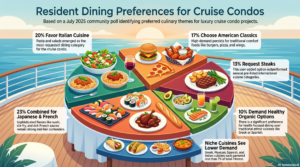
Italian cuisine came out on top with 20% of the vote, edging out American-style food at 17% and steak-focused dining at 13%. Japanese cuisine followed closely at 12%, while French-inspired dining and healthy organic food options each earned strong support as well.
Some of the results were expected, but a few stood out. Italian food has broad appeal almost everywhere in the world. Pasta, salads, breads, seafood dishes, and simple ingredients translate well across cultures and age groups. But the bigger takeaway is that residents aren’t necessarily looking for luxury dining every night. They’re looking for food they can imagine enjoying consistently over the long term.
That difference matters more than people may realize.
Traditional cruise ships often focus heavily on spectacle dining , oversized buffets, themed restaurants, and once-a-week specialty meals. But residential cruising appears to demand something different. People want places that feel familiar and sustainable for everyday living.
The popularity of American comfort food supports that idea. Burgers, pizza, wings, and casual meals remain a reliable part of how many people eat at home, and residents clearly want those options available at sea as well.
The strong showing for Japanese cuisine is also telling. Sushi and lighter stir-fry dishes appeal to residents who may be thinking long-term about wellness, freshness, and balance. Several members commented separately about wanting healthier dining options overall, which likely contributed to the 10% support for organic-focused menus.
Interestingly, highly specialized cuisines received less support. Indian cuisine, for example, received only 1% in this poll despite its growing popularity globally. Spanish tapas also ranked lower than expected.
That doesn’t necessarily mean residents dislike those cuisines. More likely, it reflects how people think differently when imagining life onboard full-time versus taking a short vacation. Residents appear to prioritize consistency, flexibility, and comfort over occasional novelty.
One of the more interesting parts of the poll was the demand for variety itself. One community member added “Variety” as its own category, which earned support independently. That may ultimately be the most important takeaway of all.
People don’t want to feel locked into a single dining style.
A residential cruise ship isn’t just a floating hotel. It becomes home. And like any home community, residents want choices that reflect different moods, schedules, health goals, and social experiences.
One night might call for steak and wine with friends. Another might mean sushi after a shore excursion or pizza during a casual movie night onboard.
For operators developing residential cruise concepts, these results offer practical insight. Residents appear to value:
* Familiar foods they can enjoy regularly
* Healthy and lighter dining options
* Flexibility and variety
* Restaurants that feel community-oriented rather than overly formal
* Comfort dining balanced with elevated experiences
As residential cruising continues to evolve, dining may become one of the defining factors that separates successful long-term communities from short-term novelty projects.
People can adapt to smaller cabins. They can adjust to changing itineraries. But food becomes part of emotional wellbeing very quickly.
And based on this poll, future residents seem to be saying the same thing clearly:
Give us quality, give us variety, and give us meals that feel like home.
Join the Live at Sea Facebook Group to share your ideas and stay updated!