
Villa Vie Odyssey Suspends Operations: What Happened, What’s Next, and Lessons for Living at Sea
Villa Vie Odyssey has suspended operations in Cambodia, leaving residents searching for temporary homes while the company seeks new financing. But a similar financial crisis involving The World more than two decades ago suggests this may not be the end of the story.
Imagine waking up one morning in your floating home, thousands of miles from where you once lived, only to discover that you have a matter of hours to pack your belongings and leave.
That is exactly what happened to residents aboard Villa Vie Odyssey on October 26, 2026.
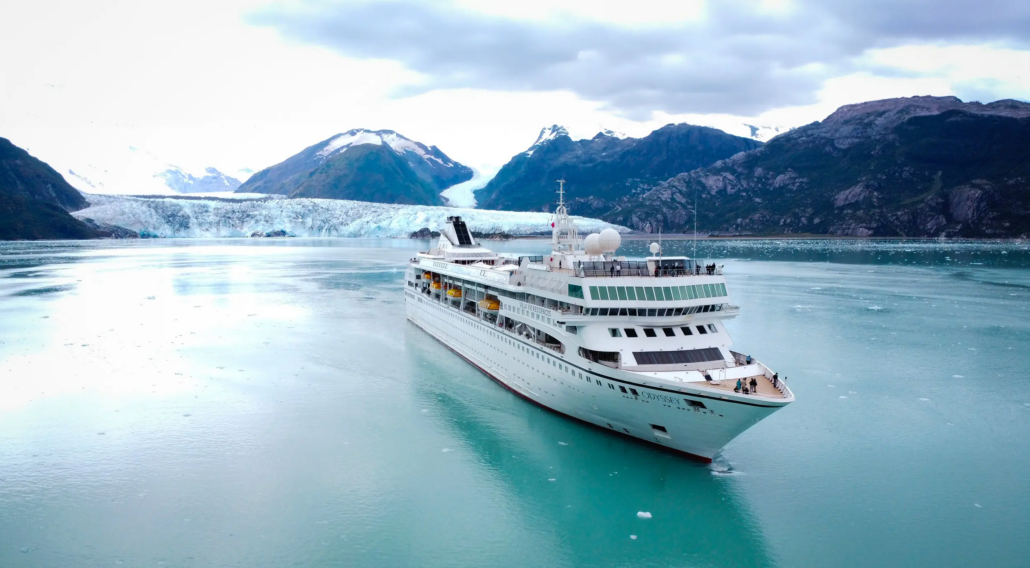
After approximately two years of sailing around the world, the residential cruise ship suspended operations in Cambodia, citing extraordinary fuel costs and an inability to secure the fuel necessary to continue sailing.
Residents were informed that the vessel would enter a temporary layup and that everyone would need to disembark by 2 p.m. Crew members would remain aboard to maintain the vessel and its essential systems.
For many residents, this was more than a disrupted vacation. This was their home, their community, and in some cases, a substantial financial investment.
The announcement raises difficult questions about the financial viability of residential cruising, particularly as several new companies prepare to enter this emerging industry.
But before declaring the end of residential cruising, there is something important to understand. We have seen a residential cruise ship navigate a financial crisis before, and the eventual outcome was remarkably successful.
A Resident’s Account: “Abandon Ship!”
Randy Cassingham, a well-known residential cruising blogger who has been living aboard Villa Vie Odyssey with his wife, Kit, published a deeply personal account of the situation titled Abandon Ship! Abandon Ship! Abandon Ship!
Randy and Kit have documented their experiences living aboard Odyssey, offering readers an unusually candid look at the realities of residential cruising.
On October 26, Randy described the announcement that brought their journey to an abrupt halt.
According to his account, the company’s CEO, Kathy Villaba, informed residents at approximately 7:08 a.m. ship time that the vessel could no longer continue operating.
Residents were instructed to disembark by 2 p.m., although arrangements were available for those needing additional time to retrieve belongings.
Randy was understandably frustrated, particularly by what he perceived as a lack of empathy in the announcement.
He also acknowledged that the problems extended beyond fuel costs. In his view, there had been a combination of business-model challenges, management mistakes, and other issues that contributed to the crisis.
One particularly moving aspect of Randy’s account was his concern for elderly residents, including widows and widowers, who suddenly found themselves without their floating homes in a foreign country. For these individuals, relocating may be far more difficult than simply booking a hotel and catching a flight home.
Yet Randy also made something else clear in his comments to readers: he and Kit had enjoyed an extraordinary two years aboard Odyssey, and the current crisis did not erase those experiences. That distinction matters.
Read Randy’s firsthand account here.
What Happened to Villa Vie Odyssey?
On October 27, Villa Vie Residences issued an official statement confirming that operations had been suspended in Cambodia while the company pursued restructuring and recapitalization.
The company pointed to extraordinary increases in fuel costs as a major contributor to its financial difficulties. And the numbers are staggering.
To put the increase in perspective, consider what has happened to diesel prices over the past 18 months.
According to the U.S. Energy Information Administration, the average retail price of diesel in the United States was approximately $3.45 per gallon in June 2025. By September 21, 2026, that price had climbed to $6.53 per gallon, an increase of approximately 89%.
These figures reflect U.S. retail road diesel rather than the marine fuel purchased by Villa Vie, but illustrate broader fuel-market volatility. Sources: https://www.eia.gov/dnav/pet/
Villa Vie’s own figures tell an even more dramatic story. According to the company, its historical monthly fuel expense averaged approximately $1,800 per cabin. Recently, that number had reached between $6,000 and $8,000 per cabin in parts of Asia.
That’s more than three to four times the original expense. For a company operating on relatively fixed monthly fees, that kind of increase can quickly make a business model unsustainable.
Villa Vie explained that it had attempted to reduce fuel consumption by slowing its itinerary and spending additional time in port. Those measures were insufficient to offset the increased costs.
The company also acknowledged that simply passing those costs along to residents was not a realistic solution.
Management has indicated that it intends to pursue restructuring and recapitalization over approximately 60 days. Importantly, the company has not announced a completed financing transaction, and there is no guarantee that operations will resume.
Nevertheless, there may be reason for cautious optimism.
Could Villa Vie Find a Way Forward?
I reached out directly to Mike, one of the owners behind Villa Vie, on October 27. His response was encouraging:
“We have strong potentials that can come in.”
That is certainly not a guarantee of a rescue, but it suggests that discussions with potential investors or financial partners remain active.
The reality is that Villa Vie still has something valuable. It has an actual ship, an established residential community, people who genuinely love the lifestyle, and a concept that has attracted considerable interest.
Those assets may have value to a new investor or operator, even if the current business model needs to change significantly.
A successful restructuring could involve new investors, additional capital, changes in management, higher monthly fees, revised itineraries, or a combination of these measures. We simply do not know yet.
The important point is that a temporary suspension of operations does not necessarily mean the permanent end of the venture. And there is an important historical precedent.
The World Faced a Financial Crisis Too
One of the most interesting parallels is The World, the pioneering residential cruise ship that launched in 2002.
Today, The World is widely regarded as one of the most successful examples of residential cruising. Its residences are marketed for resale at prices ranging from approximately $3.5 million to $15 million.
But its early years were not nearly as successful as many people might imagine.
The original operating company, ResidenSea, experienced serious financial difficulties. By 2003, the venture was facing major challenges involving its financing and operating structure.
Rather than allowing the venture to collapse, residents ultimately participated in a restructuring that changed the ownership of the ship.
On September 30, 2003, the residents purchased The World, transitioning the vessel toward a resident-owned model.
More than two decades later, The World continues operating as an exclusive residential community at sea. The transformation is remarkable.
A venture that experienced significant financial distress became one of the most established residential cruising operations in the world.
While advertised resale prices do not prove how much individual residences have appreciated, The World has established a long-running business model.
The lesson is not that every troubled residential ship will recover. It is that financial restructuring can sometimes create a stronger business model than the one that originally launched.
Villa Vie’s situation is different, and there is no assurance of a comparable outcome. But history demonstrates that a financial crisis does not automatically mean the end of a residential ship.
Source: https://aboardtheworld.com/
The One Lesson Every Prospective Resident Should Learn
If there is one lesson to take away from Villa Vie’s financial troubles, it is this: before buying or even renting aboard a residential cruise ship, understand the financial strength of the company operating it.
It is easy to get caught up in the excitement of living at sea. The destinations, the lifestyle, the friendships, and the freedom are incredibly appealing.
But behind every residential ship is a business that must manage enormous operating costs.
Fuel, maintenance, insurance, crew, food, port fees, and unexpected mechanical problems can quickly change the economics of operating a vessel.
A business plan might work beautifully when fuel costs are stable and occupancy is high. But what happens when fuel costs triple? What happens when the ship needs an unexpected major repair? What happens when a significant percentage of residents stop paying monthly fees?
Does the operator have sufficient financial reserves? Does it have access to additional capital? Are there experienced investors behind the venture who can step in when things go wrong?
These are questions that every prospective resident should be asking.
And while ownership arrangements differ significantly between residential cruise projects, buyers should understand exactly what they are purchasing and what happens if the operator encounters financial difficulties. The same principle applies to renters, especially those committing to extended periods aboard.
The real question is not simply whether the business can operate when everything goes according to plan. It is whether the company has the financial resources and experience to survive when things go wrong.
What Happens to the Villa Vie Community?
One of the saddest aspects of this situation is the disruption to the community that developed aboard Odyssey.
At LiveAtSea.com, we have interviewed several people who have lived aboard Villa Vie. What stood out was how much they loved the experience.
They spoke about the friendships, shared adventures, and sense of belonging that developed from living together aboard a relatively small ship.
For many residents, this was never simply about visiting exotic destinations. It was about being part of a community.
There is something special about traveling the world with people who share your enthusiasm for adventure, discovery, and a different way of living. That is difficult to replicate on land.
The question now is whether that community can survive the restructuring.
Some residents may decide to move on. Others may be willing to return if new financing and a more sustainable operating structure emerge.
There may also be an opportunity for residents themselves to participate in a solution, much as they did aboard The World in 2003.
But any restructuring must recognize that this is more than a financial transaction. These are people’s homes, friendships, and lives. And for some residents, significant amounts of money are at stake.
My Take: Residential Cruising Is Still a Revolution in the Making
I have started more than a dozen companies over the past 30 years, written the bestselling book Start. Scale. Exit. Repeat., and spent much of my career helping entrepreneurs understand how businesses succeed, struggle, and sometimes reinvent themselves.
One lesson has become abundantly clear. Startups are never a straight line.
Bad things happen. Costs rise. Business models prove inadequate. Management makes mistakes. Sometimes outside circumstances create challenges that even experienced operators struggle to overcome.
In Villa Vie’s case, the company reports that fuel expenses increased to more than three to four times their historical levels, a staggering increase for a business that depends on moving a large vessel around the world.
But fuel costs are only part of the story. It will take time to fully understand the financial and management decisions that led to this situation.
For anyone considering buying or even renting aboard a residential ship, the lesson is clear. You need to understand whether the people operating that ship have the financial resources, experience, and contingency plans necessary to withstand unexpected challenges.
I truly believe we are on the precipice of a major paradigm shift in how people live.
For the first time, technology is making it practical for a much larger number of people to work, communicate, and maintain relationships while traveling continuously around the world.
Elon Musk’s Starlink has played an important role in making that possible by bringing high-speed satellite internet access to ships traveling across the globe. That changes everything.
People no longer need to remain tied to a particular city, office, or country to maintain their careers and relationships. And residential cruising offers something uniquely attractive: the opportunity to travel the world while maintaining a consistent home and community.
But this industry is still young and nascent. Not every venture will succeed.
I also believe the Villa Vie situation will have consequences far beyond this one ship.
Potential buyers will become more cautious. Investors will ask tougher questions. Developers of new residential cruise projects will face greater scrutiny about their financial backing, operating models, and ability to deliver on their promises. And frankly, that scrutiny is probably necessary.
We also cannot ignore the human and financial consequences of what has happened.
Let’s not beat around the bush. Some people made enormous financial commitments to Villa Vie, and they may now be at risk of losing some or even all of their money.
Others have lost access to their homes, at least temporarily, and now face the uncertainty of finding somewhere else to live. That is serious, and we should not minimize it.
At the same time, I don’t believe we should dismiss what Villa Vie accomplished.
It created a residential community aboard an actual operating ship. It gave people the opportunity to experience a lifestyle that, until recently, seemed available only to the extremely wealthy.
And from our conversations with residents who lived aboard Odyssey, it sounds as though the company created something genuinely special.
The people we interviewed loved their lives aboard the ship. They loved the friendships, the adventures, and the community. That has real value.
There is also an economic argument for finding a solution. An existing vessel, an established community, and a group of residents who want to continue living at sea may be worth preserving if a viable financial structure can be established.
It is clearly not in anyone’s interest to simply abandon the ship and allow that community to disappear if a responsible alternative exists.
Perhaps new investors will emerge. Perhaps residents will become involved in a restructuring. Perhaps the business model will change.
The World demonstrated that a struggling residential ship could emerge from a financial crisis with a more sustainable ownership structure.
Could Villa Vie follow a similar path? We don’t know. But I certainly wouldn’t count it out yet.
The residential cruising revolution is bigger than any one company.
There will undoubtedly be setbacks along the way, just as there have been in virtually every emerging industry. Some ventures will fail. Others will adapt. And a few may ultimately define an entirely new way of living.
My hope is that Villa Vie, its investors, and its residents can find a path forward that protects as much of the community and its financial commitments as possible.
After all, the ship still exists. The community still exists. And the dream of living at sea is very much alive.
Sometimes the challenge isn’t avoiding the storm. It’s finding a way through the fog.
Colin C. Campbell is a serial entrepreneur, founder of Startup Club, and founder of LiveAtSea.com, a community and publication exploring the emerging residential cruising industry.
OFFICIAL PRESS RELEASE
https://www.prnewswire.com/